Skip to content

Melanie Stidolph

Exhibition: Anchorhold, ALMA artspace

2026

Anchorhold, ALMA Artspace, 5 Wesley Yard, Newquay TR7 1LB.

16 May – 16 June 2026

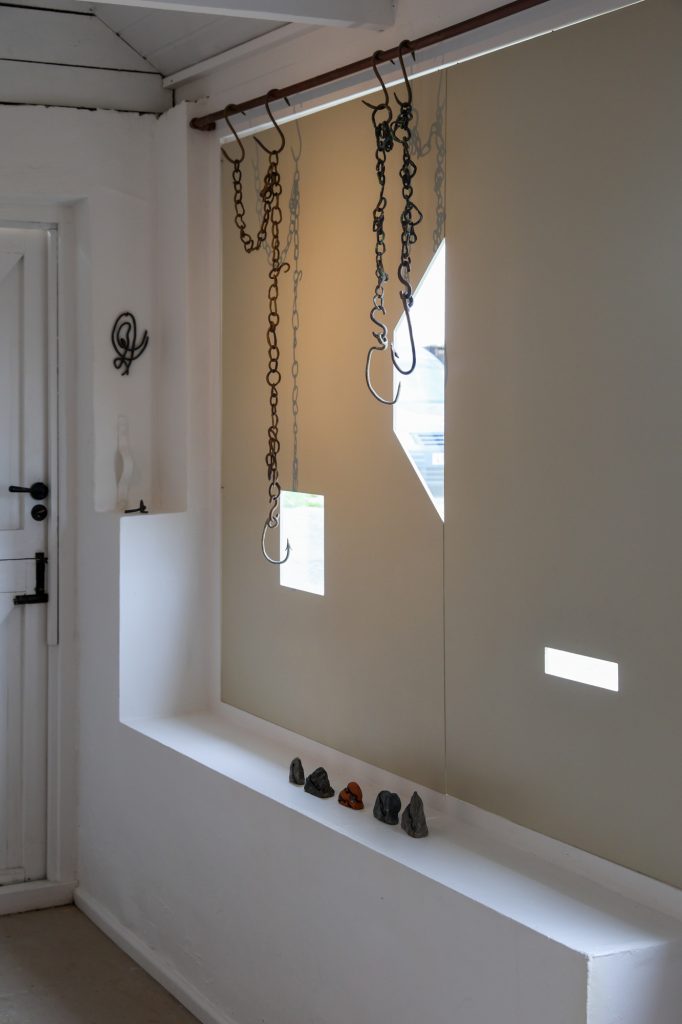
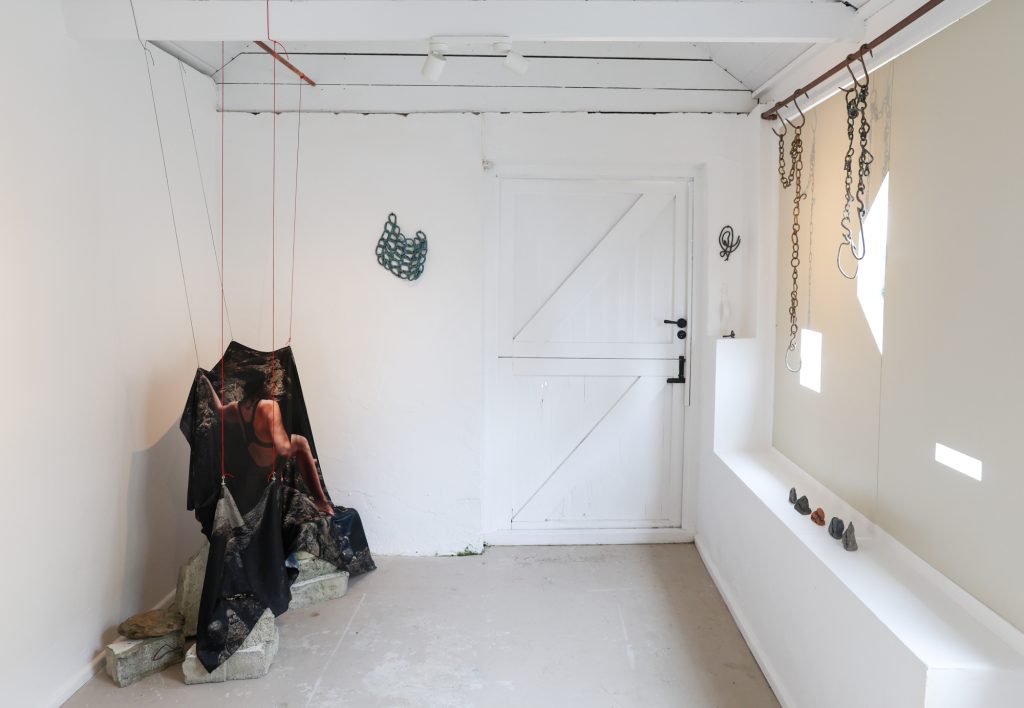
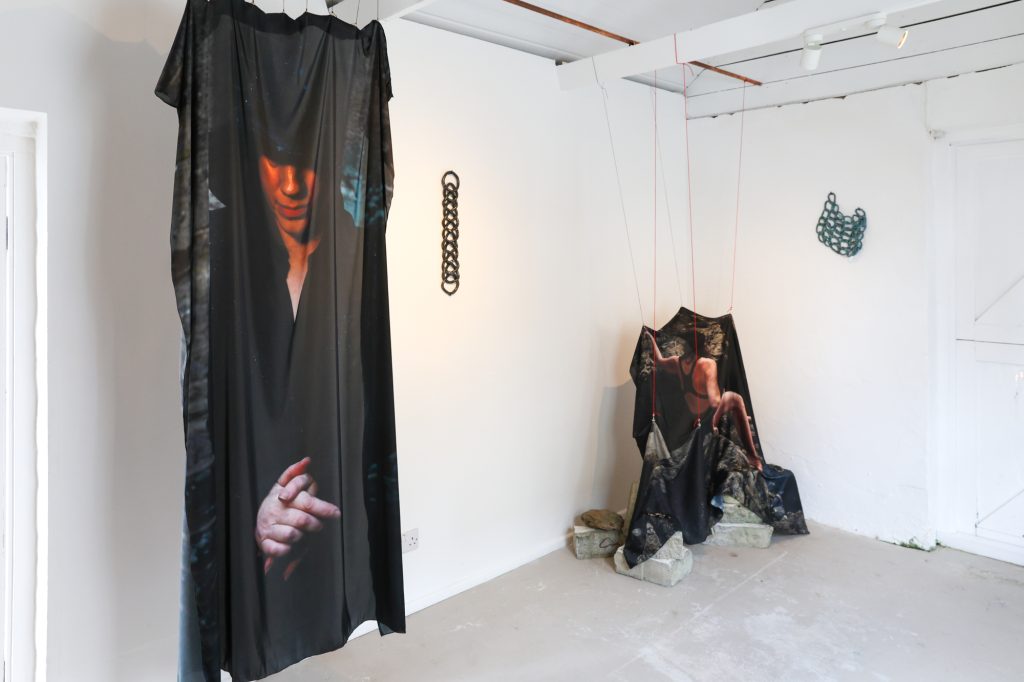
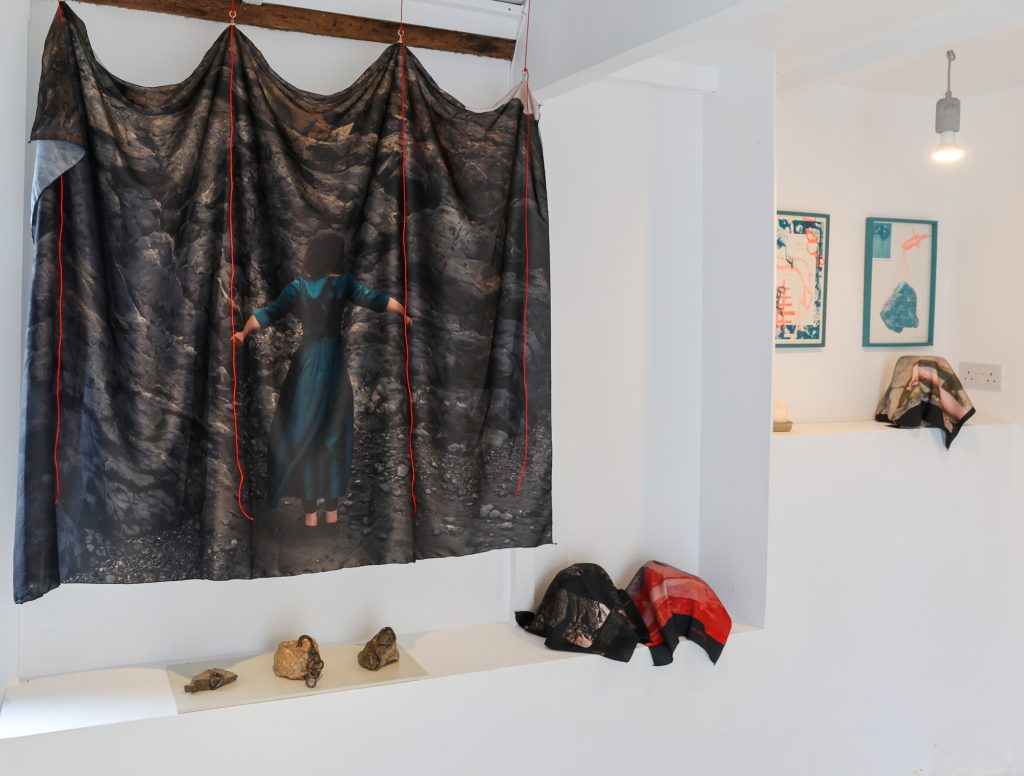
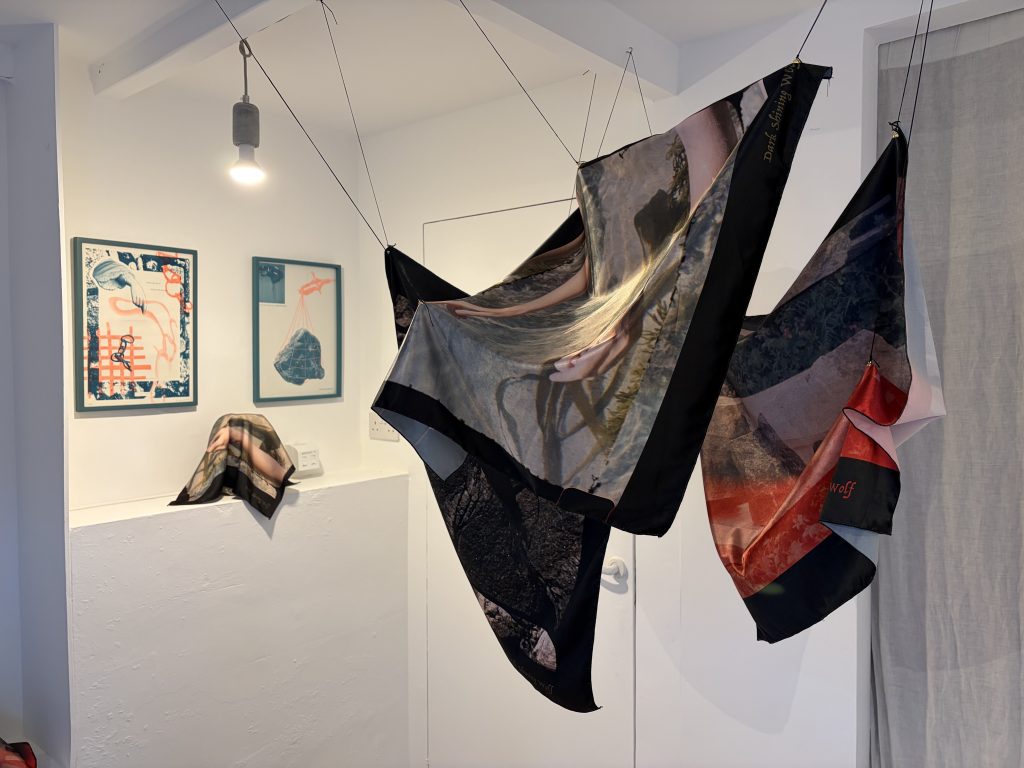
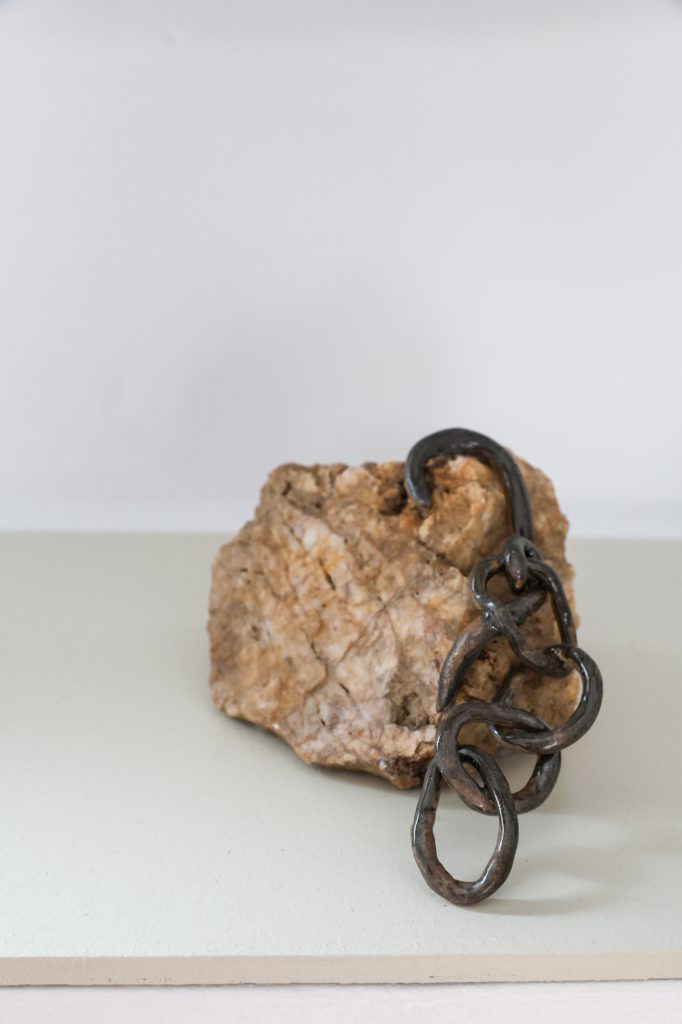
Anchorhold was a two person show with Rachael Coward at ALMA artspace in Newquay – directed by Lucy Ward and Ingrid Pop. The exhibition brought together existing works and new pieces in conversation. Coward’s fragile works reference the practical hardware of the shoreline, shifting between utilitarian and symbolic offerings. These delicate ceramic pieces sit alongside the slippery draping of Stidolph’s printed fabrics, depicting characters in communion with the rocky edges of Cornwall’s coast. Together they created an installation for ALMA artspace that embodied the sanctity of the studio, aligning it with the religious space of the Anchorhold. These spaces of voluntary enclosure sat adjunct to places of worship, inhabited by an Anchorite or Anchoress with limited sightlines to the outside world.

Thank you to Ceda Parkinson and Millie Burdet of Creative Field Notes for inviting us to talk on their show on SourceFM. You can listen back to the episode on 13 June here.

Thank you for the reflection on the exhibition by Dr Ella S. Mills; art historian, curator and artist mentor based in Devon @cassinellimills – scroll down for full text. 

Pollock argues that the virtual feminist museum opens a different kind of time; not a timeline but a field of encounter. To be with Anchorhold is to feel that field. What holds this together is not influence but resonance. These women have not passed something forward, one to the next; rather, we see a net, not a genealogy. Each node in tension with every other, across time and distance.

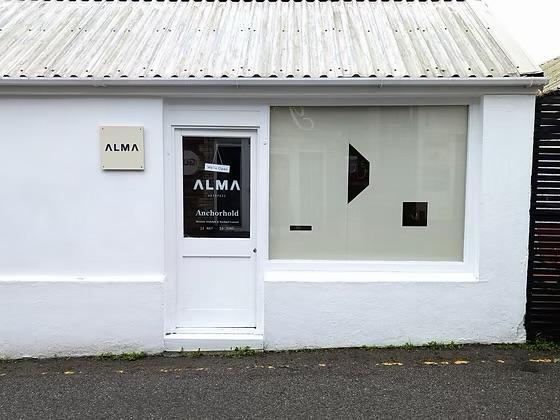
ALMA artspace, Newquay

Image caption: ALMA artspace, Newquay

Anchorhold, installation, photo, Ingrid Pop

Image caption: Anchorhold, installation, photo, Ingrid Pop

Anchorhold installation, photo: Ingrid Pop

Image caption: Anchorhold installation, photo: Ingrid Pop

Anchorhold installation, photo: Ingrid Pop

Image caption: Anchorhold installation, photo: Ingrid Pop

Anchorhold installation, photo: Ingrid Pop

Image caption: Anchorhold installation, photo: Ingrid Pop

Anchorhold, installation, photo: Melanie Stidolph

Image caption: Anchorhold, installation, photo: Melanie Stidolph

Anchorhold, ALMA artspace, opening night, photo: Melanie Stidolph

Image caption: Anchorhold, ALMA artspace, opening night, photo: Melanie Stidolph

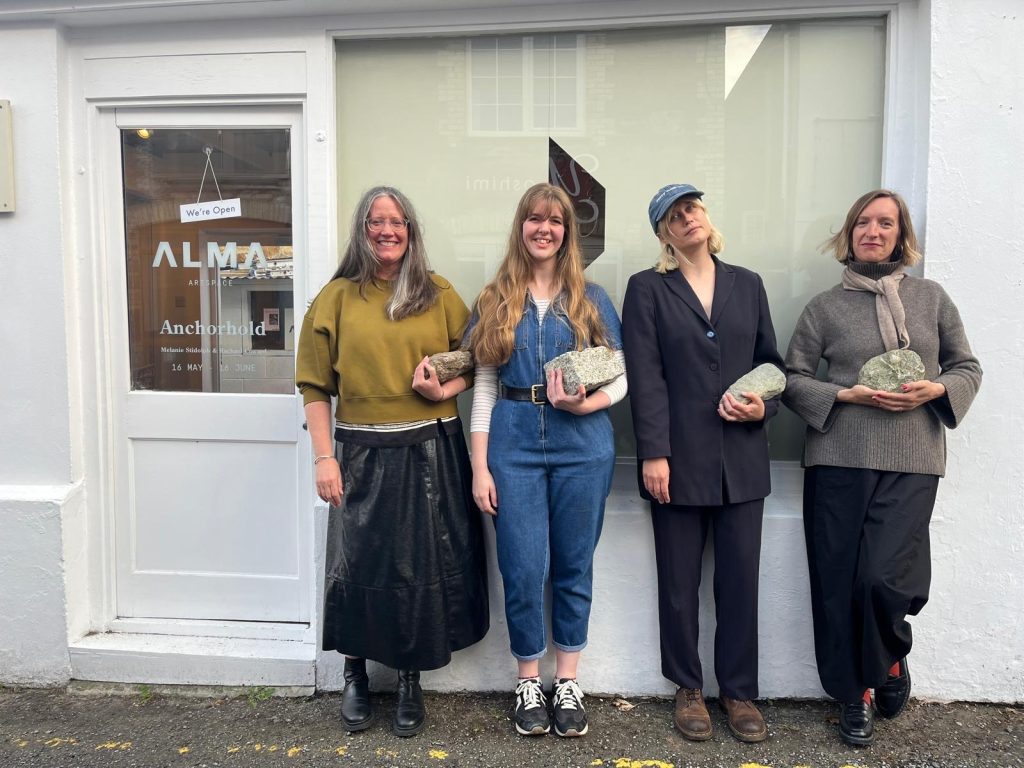
Left to right: Melanie Stidolph, Rachael Coward, Ingrid Pop, Lucy Ward outside ALMA artspace, photo: Alice Mahoney

Image caption: Left to right: Melanie Stidolph, Rachael Coward, Ingrid Pop, Lucy Ward outside ALMA artspace, photo: Alice Mahoney

Anchorhold: A Reflection

Dr Ella S. Mills

When the invitation arrived to reflect on the exhibition Anchorhold at ALMA Artspace – an invitation from women, about women, at a space run by women – it made me think of what Griselda Pollock describes as the conditions of encounter: that before we stand before any work, we are already positioned, already implicated, already in relation. In Encounters in the Virtual Feminist Museum: Time, Space and the Archive Pollock argues that the feminist encounter with art is not simply optical but temporal; that it opens a different kind of time, a space of relation that cuts against the linear orderings of art history. This, I felt, was already happening before I crossed the creative and conceptual threshold of thinking with the works of Melanie Stidolph and Rachael Coward in this exhibition.

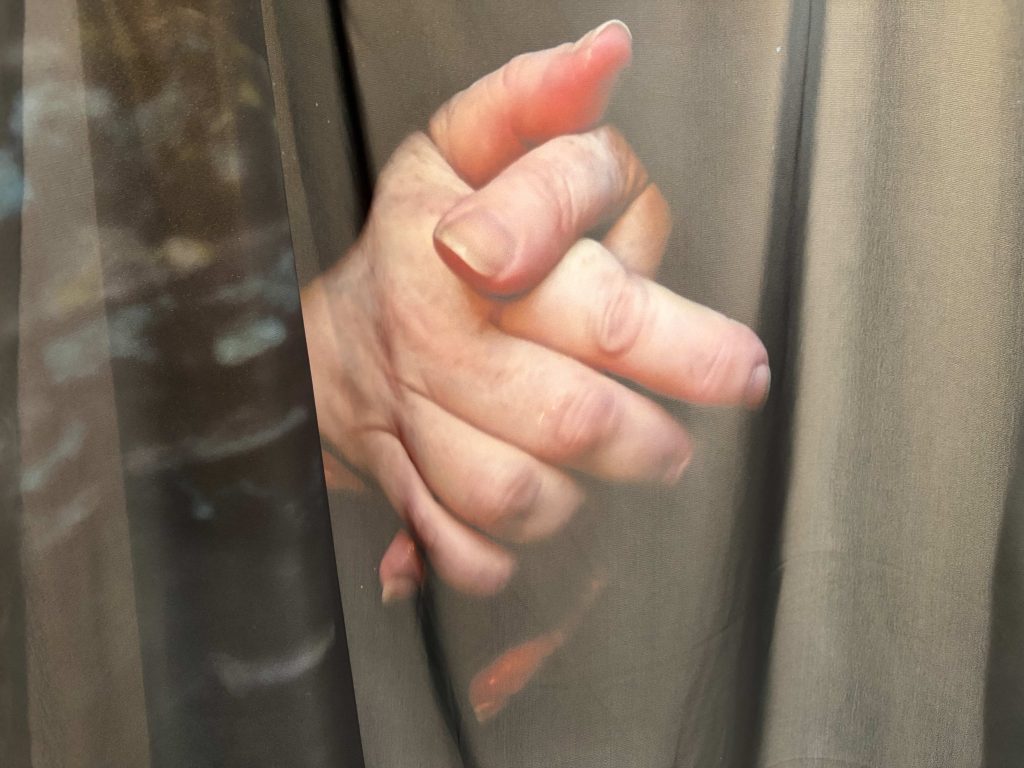
As the interpretation explains, the anchorhold of medieval Christian practice was not a prison but a chosen cell, a place of voluntary enclosure attached to a church wall, in which an anchoress (or anchorite) could withdraw from the world, not to escape it but to attend to it more completely. She was walled in as an act of spiritual commitment, though the cell was not sealed. She lived with a small squint, a narrow aperture through which she could see the altar, and, a curtained window through which she could counsel women, receive visitors and sustain a life of purpose within radical constraint.

Julian of Norwich, the fourteenth-century mystic and theologian, is the most famous English example of an anchoress and the author of the earliest known surviving English language work by a woman. Enclosed in her cell at St Julian’s church in Norwich for decades she produced Revelations of Divine Love, a work of extraordinary visionary precision. Her most-cited words, ‘all shall be well, and all shall be well, and all manner of thing shall be well’, are frequently misread as comfort. They are not. They are the words of a woman who had looked at suffering without resolution and refused to look away. The wellness she speaks of is not arrived at. It is endured toward.

What is less often remarked upon is the vital role of women in the text’s survival and transmissions. Julian’s text was preserved in a handful of manuscripts for centuries after her death, largely neglected. One copy was held by a community of exiled Catholic nuns in Paris, where it was found and printed by a Benedictine monk, then reprinted by Anglican clergymen, each with their own doctrinal purposes, until, in 1901, the Scottish editor Grace Warrack finally freed Julian from this confessional ownership. Warrack’s edition, though not the earliest, was the first to contextualise Julian’s words as devotional rather than as purely religious commandments, allowing the more general public access to her writings. The title page of Warrack’s edition was illustrated by Phoebe Anna Traquair, an Irish-born artist who became the first significant professional artist-woman of modern Scotland, working across murals, embroidery, enamel and manuscript illumination, refusing the distinction between fine and applied art.

Pollock argues that the virtual feminist museum opens a different kind of time; not a timeline but a field of encounter. To be with Anchorhold is to feel that field. What holds this together is not influence but resonance. These women have not passed something forward, one to the next; rather, we see a net, not a genealogy. Each node in tension with every other, across time and distance.

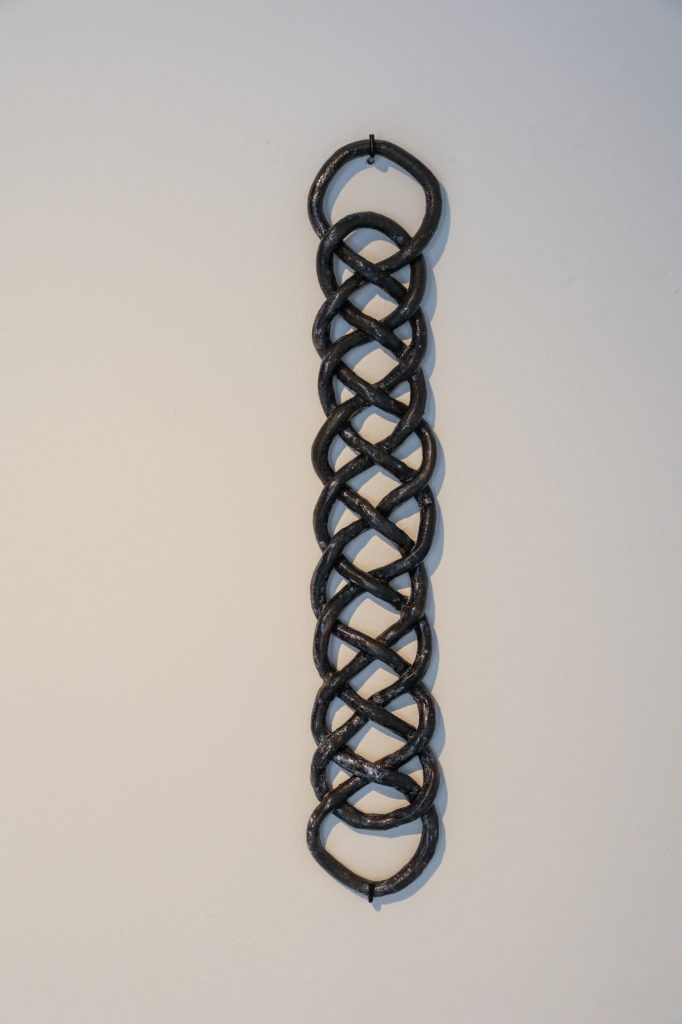
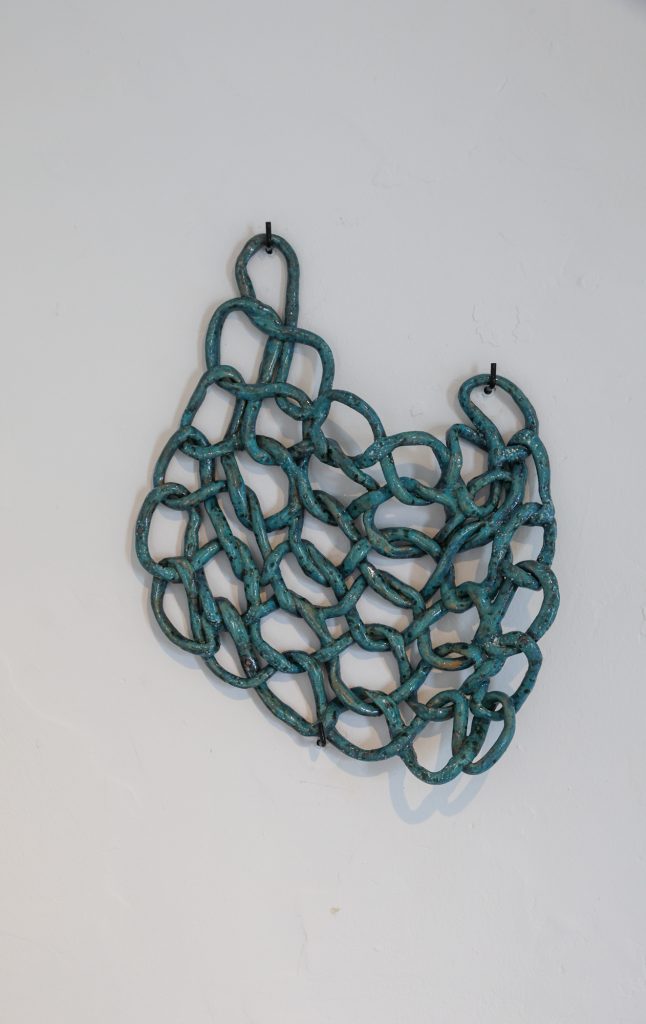
Rachael Coward’s pieces Buriana’s Net & Buriana’s Knot speak clearly to this idea and bring into focus another anchoress. St Buriana of Cornwall was a sixth-century anchoress hailing from Ireland, linked to the village of Saint Buryan located near the rocky and dramatic Cornish coastline. Coward’s wood-fired, ash-glazed ceramics are strongly connected to the local lands, referencing as ALMA states, ‘the practical hardware of the shoreline’,and, using clay, dust and ash from Cornish quarries she creates objects both strong and extremely fragile.

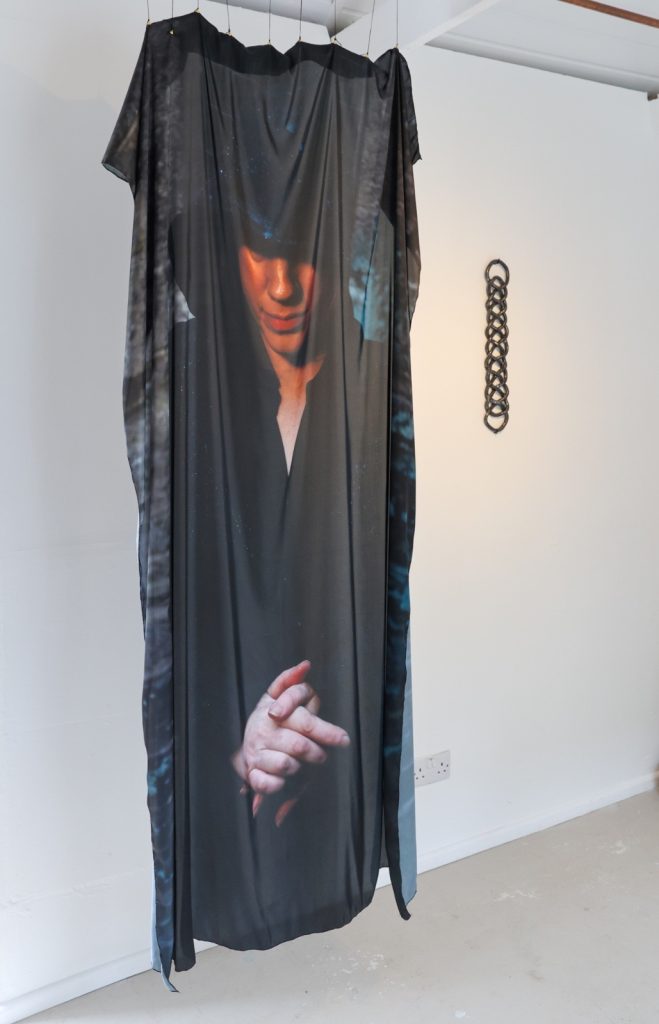
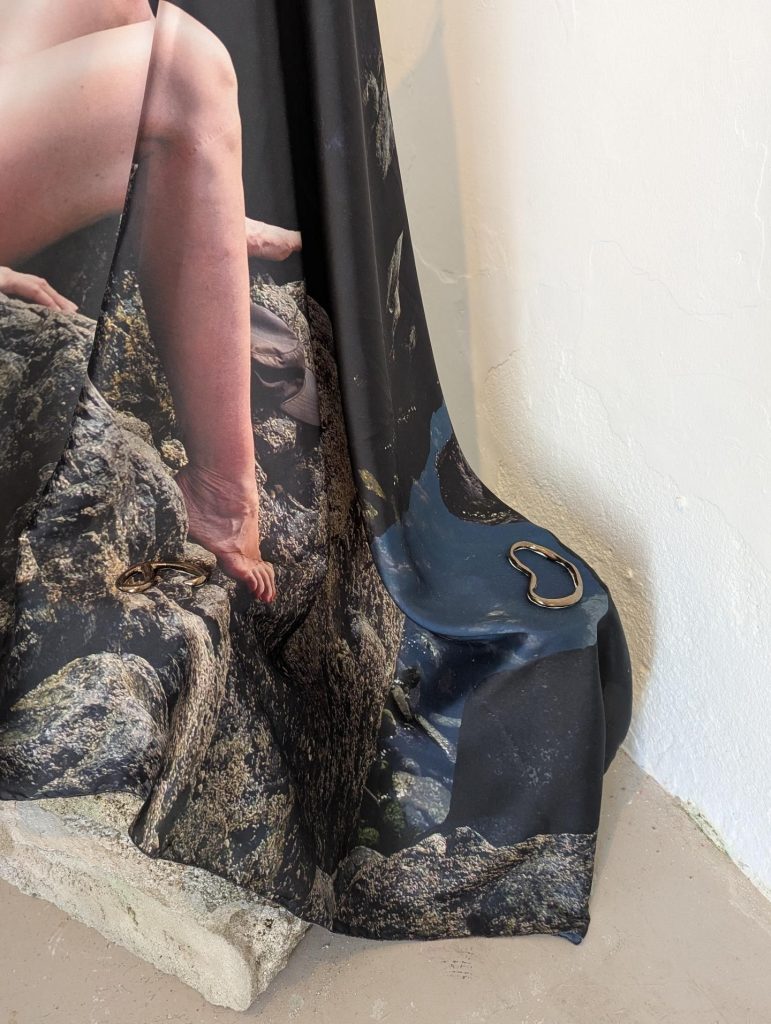
Melanie Stidolph’s large-scale photographic prints on fabric, such as Accidental Anchoress, hang and drape and fall. The figures in these works are in communion with the rocky Cornish coast, arms open or body turned. Stidolph’s practice has long been concerned with women’s bodies in relation to longing and loss and living with childlessness. What does it mean to find yourself enclosed by a devotion never realised?

Julian of Norwich wrote from enclosure and became a point of contact for an entire community. The world reached her through her squint, in fragments, and she received it with extraordinary care. Stidolph and Coward are not enclosed in the same way; they are working, mobile and collaborative, making work in and from the world. But there is something anchoritic in the quality of attention this exhibition asks of us. To be held by it, briefly, inside a small room in Newquay, with Buriana’s name in the work and the symbolic and emotional space of the sea as a backdrop. We are asked to encounter the works with focus, care: devotion. All shall be well. Not as consolation. But as a kind of staying.

Dr Ella S. Mills is an art historian, curator and artist mentor based in Devon @cassinellimills
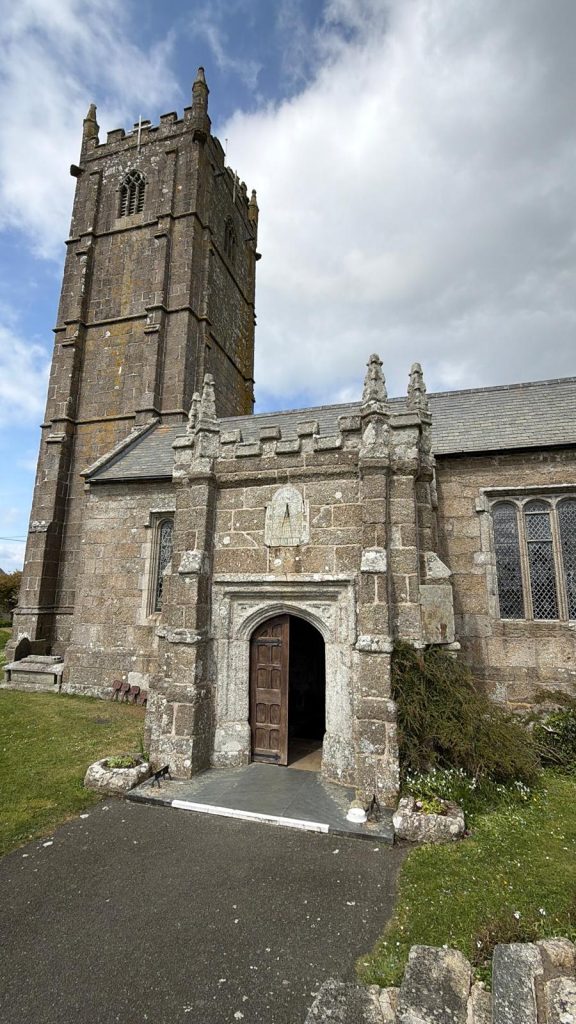
St Buryan church, Cornwall

Image caption: St Buryan church, Cornwall

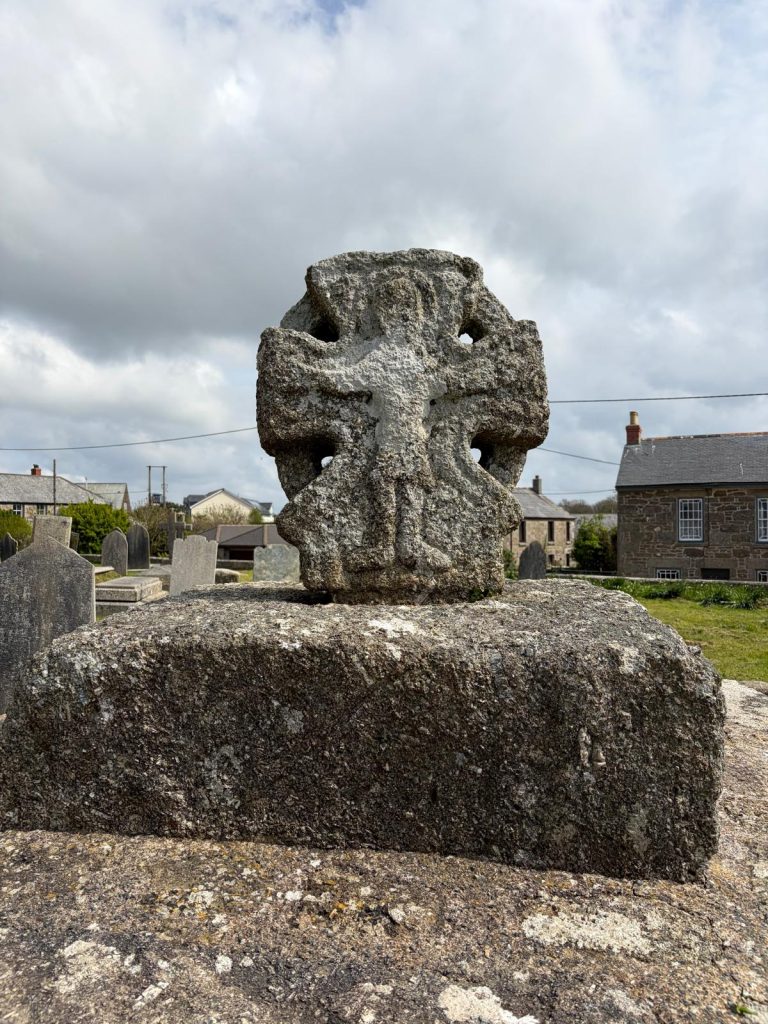
Marker for site of St Buriana's Anchorhold, St Buryan church, Cornwall

Image caption: Marker for site of St Buriana's Anchorhold, St Buryan church, Cornwall

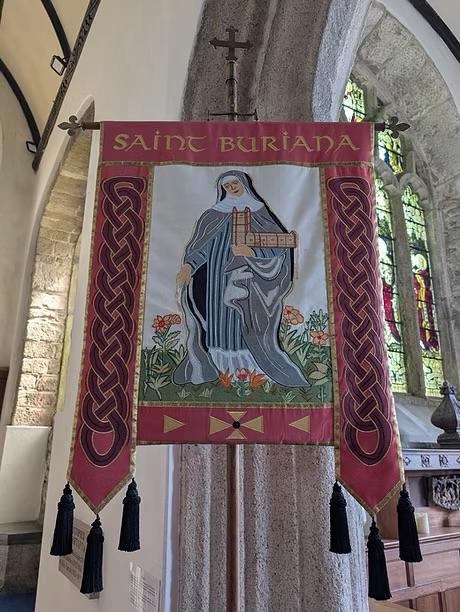
St Biriana banner, St Buryan church, Cornwall

Image caption: St Biriana banner, St Buryan church, Cornwall

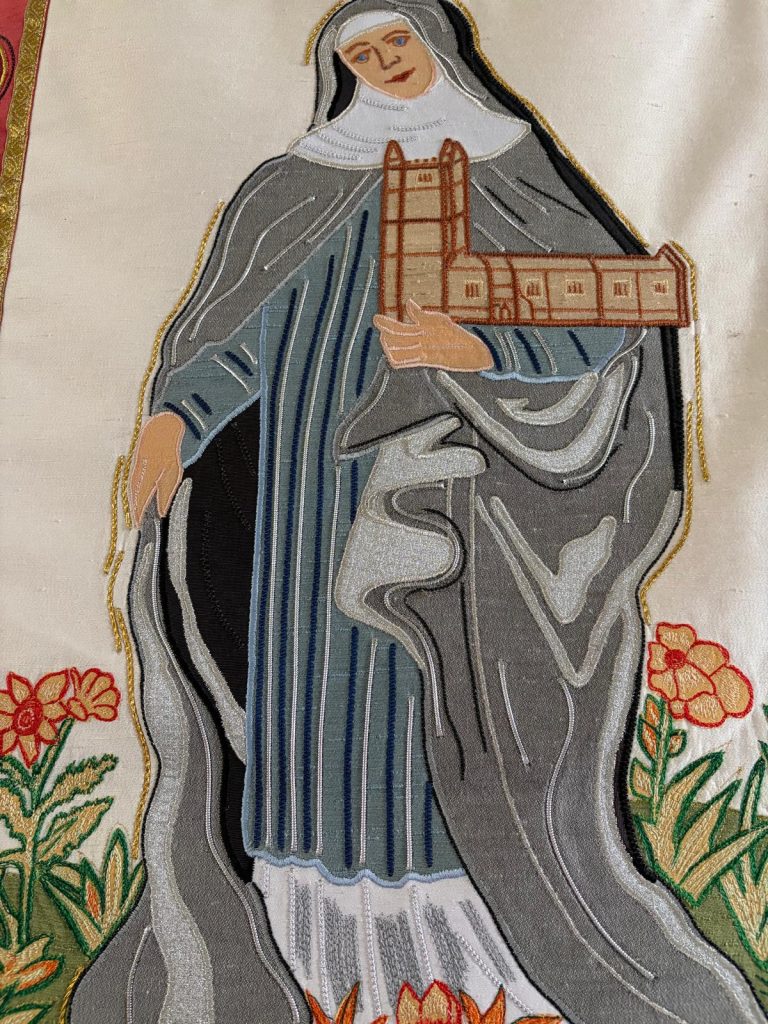
St Biriana banner, detail, St Buryan church, Cornwall

Image caption: St Biriana banner, detail, St Buryan church, Cornwall

Anchorhold, installation, 'Accidental Anchoress', Melanie Stidolph & 'Buriana’s Knot', Rachael Coward, photo: Melanie Stidolph

Image caption: Anchorhold, installation, 'Accidental Anchoress', Melanie Stidolph & 'Buriana’s Knot', Rachael Coward, photo: Melanie Stidolph

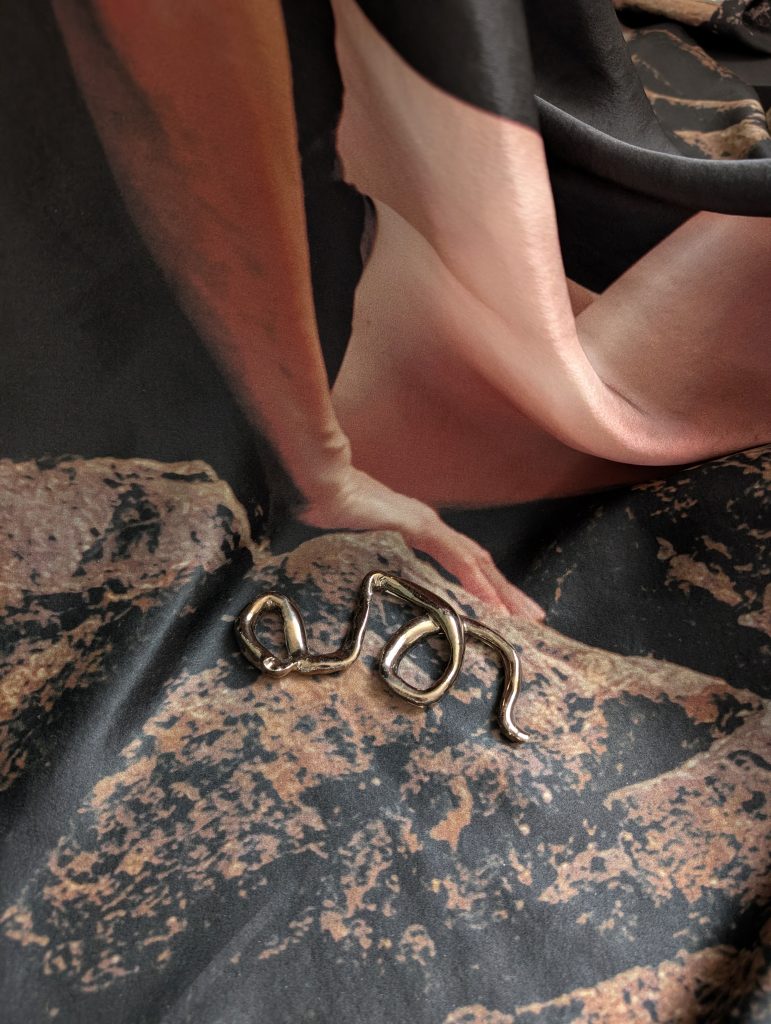
Anchorhold, installation, detail, 'Buriana’s Knot', Rachael Coward, photo: Melanie Stidolph

Image caption: Anchorhold, installation, detail, 'Buriana’s Knot', Rachael Coward, photo: Melanie Stidolph

Anchorhold, installation, detail, 'Accidental Anchoress', Melanie Stidolph, photo: Melanie Stidolph

Image description: Anchorhold, installation, detail, 'Accidental Anchoress', Melanie Stidolph, photo: Melanie Stidolph

Anchorhold, installation, detail: 'Untitled' from work in progress 'Turning to Stone', Melanie Stidolph with ceramic works, Rachael Coward, photo: Erika Cann

Image caption: Anchorhold, installation, detail: 'Untitled' from work in progress 'Turning to Stone', Melanie Stidolph with ceramic works, Rachael Coward, photo: Erika Cann

Anchorhold, installation, detail, photo: Melanie Stidolph

Image caption: Anchorhold, installation, detail, photo: Melanie Stidolph

Anchorhold installation, 'Buriana’s Net', Rachael Coward, photo: Ingrid Pop

Image caption: Anchorhold installation, 'Buriana’s Net', Rachael Coward, photo: Ingrid Pop

Anchorhold installation, detail, 'Barely There', Rachael Coward, photo: Ingrid Pop

Image caption: Anchorhold installation, detail, 'Barely There', Rachael Coward, photo: Ingrid Pop

Melanie Stidolph

Last year I spent a lot of time in the studio, mostly with the blinds down, or open just enough to let in a little light. There are three ‘openings’ to my studio – a window onto the courtyard below, one onto Back Road West & a door to the same street. In summer & winter, I came early (all the better to park) and left in enough time to go home for tea. A year later & I’ve opened the blinds (though not always the window as it seems to be situated at the exact point where families fall out with each other on the way to / from the beach) as far as they will go. In April Lucy Ward & Ingrid Pop walked through the door and invited me to show at ALMA artspace in Newquay. I invited Rachael Coward & we started to look at what we might make.

Key words for Rachael included ‘Anchor’ which got me to a memory of ‘Anchorholds’ & then a search took us to St Buriana / Buryana of St Buryan in Cornwall. You can see a stone monument to her in the churchyard (marking her Anchorhold site) & banners & stained-glass that depict her cradling the church. The myths & legends (chased by a king, saved by St Piran & a cuckoo) are fascinating; imagination & solid stone holding a story that the village of St Buryan keeps alive, celebrating her feast day on the nearest Sunday to 13 May each year.

‘Anchorhold’ opened on 16 May, our occupation of the gallery included boarding up the window to create three access points, echoing the architecture of anchorholds: The Squint or Hagioscope allowed the occupant to follow the church service, the Parlour window – for communion with the outside world & the House window – to pass food in / waste out. Inside the gallery our works are paired with each other – including pieces from ongoing concerns & new works made in response to the Cornwall Anchoress – ‘Buryana’s knot’ by Rachael & ‘Accidental Anchoress’ by me; a portrait in character of Dr D Ferrett made with the support of brilliant photographer Neal Megaw on a stormy night.

Rachael Coward

At the moment in my work I am drawn to making impossible things out of clay. I enjoy the challenge of sculpting something that should be hard-wearing and reliable out of something that is the exact opposite. I love making work that sits in this kind of grey area, not quite one thing or another. The invitation to work with @melaniestidolph on this exhibition at @almaartspace began as a conversation between ceramic and fabric; how my not-quite-hardware ceramic works could interact with/hold/secure Mel’s brilliantly slippery photographic prints.

What began as a mission to make fabric-specific hardware became a conversation between our two practices, with works being paired together in the gallery. Connections mostly implied rather than physical, ‘offerings’ placed in proximity to figures emerging from the Cornish landscape. Taking inspiration from St Buriana, an anchoress in Cornwall, enclosed on the site of St Buryan church.

I’ve been thinking about objects that we use to tether, to ground ourselves and other things around us. In an area surrounded by the detritus of the fishing industry, I’ve been thinking a lot about weights, cradles, tackle & nets. The new works that I’ve created for this show speak specifically to the banner of St. Buryana and the intertwined fisherman’s knots featured on it. Symbolically a fisherman’s knot signifies a tether to a loved one or a maritime life, but in these very delicate works they indicate another kind of tether, the choice made to enclose oneself in one location for a lifetime of solitude. This project has led to some brilliant conversations, and what feels like only the beginning of something much broader.